https://vox-populi-nine.vercel.app/articles/artificial-intelligence-and-copyright-law-a-legal-grey-area
Artificial Intelligence and Copyright Law: A Legal Grey Area
When Machines Create: Who Owns the Copyright? Artificial intelligence is transforming creativity, but who owns what machines produce? This article explores the legal grey areas surrounding AI-generated content, copyright ownership, training data and infringement under Indian law. It examines emerging judicial developments and proposes legislative reforms to balance technological innovations.
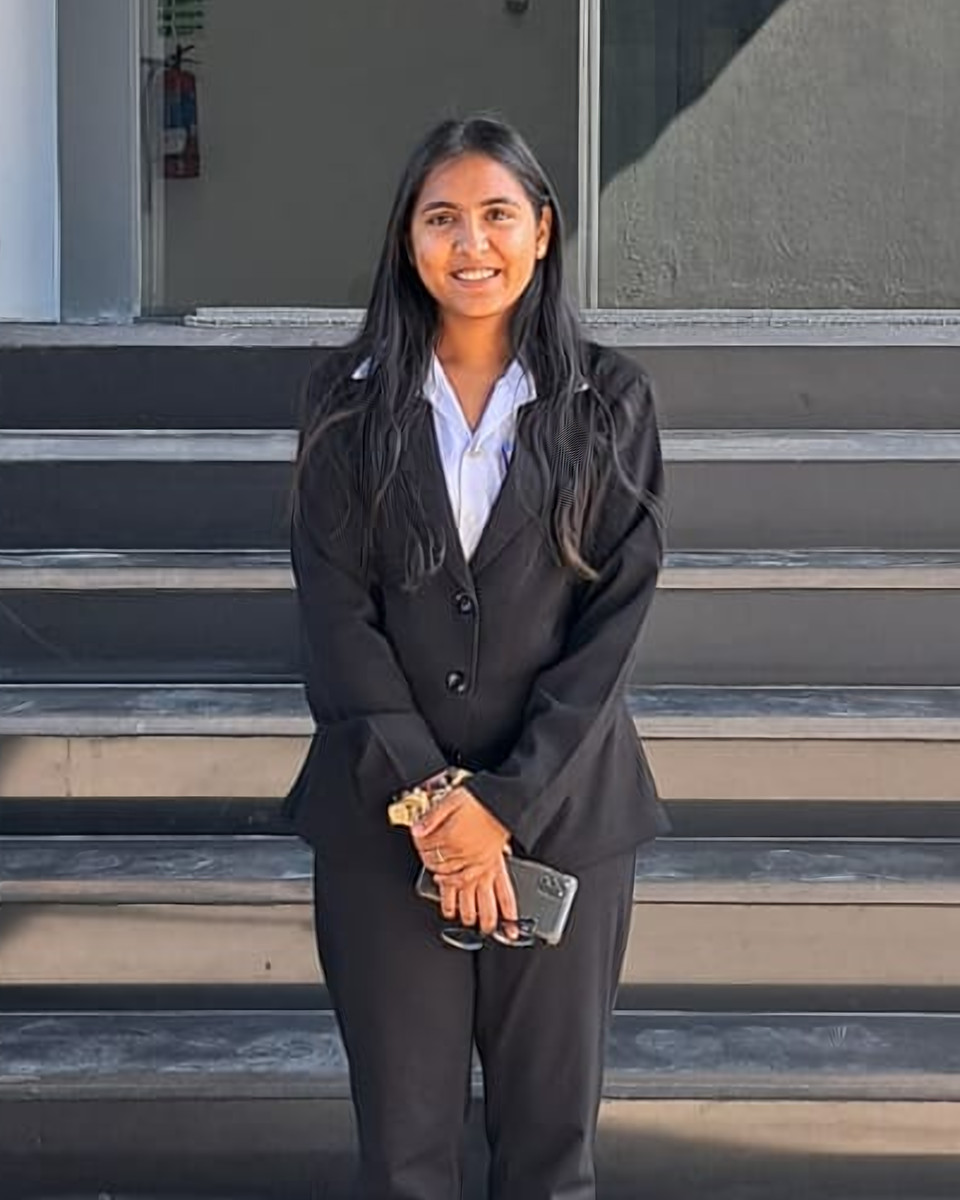 By Suvidhi Jain
ARTIFICIAL INTELLIGENCE AND COPYRIGHT LAW: A LEGAL GREY AREA
A Study of AI-Generated Content, Copyright Ownership and the Need for Legislative Reform in India
1. INTRODUCTIONIf a machine can compose a song, paint a portrait and produce a short story in seconds, should the law simply congratulate the machine and politely ask the human creator to accept that years of practice have become technologically inconvenient? The question is deliberately sarcastic, but the legal problem is serious: speed and novelty of output do not, by themselves, resolve authorship, ownership or infringement.
Creativity is generally defined as producing ideas or works that are both novel and useful.[1] Traditionally, creativity has been associated with human imagination, judgment, experience and skill. Generative artificial intelligence (“AI”), however, can now produce text, illustrations, photographs, musical compositions, lyrics, video and other material that resembles human expression. It has therefore unsettled assumptions on which copyright law has historically operated.
The central question is not simply whether AI can create content. It is whether the existing legal framework can determine who, if anyone, is the author of that content; whether copyrighted works may lawfully be used to train AI systems; and what remedies should be available where an output reproduces protected expression. These questions must be separated. The legality of using a work as training data is distinct from whether a generated output is itself copyrightable or infringes an existing work.
This article examines the issue principally through Indian law, particularly the Copyright Act, 1957, while drawing limited comparisons with the United States, the United Kingdom and the European Union. It argues that the law is not wholly silent: provisions such as Section 2(d)(vi) already address computer-generated works. The difficulty lies in applying existing language to modern generative systems and in the absence of a sufficiently detailed statutory framework for commercial training, transparency and remuneration.
2. UNDERSTANDING ARTIFICIAL INTELLIGENCEArtificial intelligence is an umbrella term for computational systems designed to perform tasks commonly associated with human cognitive abilities, including recognising patterns, processing language, making predictions and generating material. Contemporary AI systems may use machine-learning techniques in which a model is trained on data and adjusts internal parameters to produce outputs in response to new inputs. The legal significance of this process depends on what material is used, how it is processed and what the system subsequently produces.[2]
2.1 Traditional AI and Generative AI
Traditional or predictive AI is commonly used to classify information, detect fraud, recommend products, recognise speech or estimate likely outcomes. Its immediate output may be a classification, score, prediction or recommendation. Such systems can still raise intellectual-property questions, particularly where they process protected material, but they do not necessarily generate expressive works in the ordinary sense.
Generative AI, by contrast, is designed to produce new material, including text, images, audio, music, video and software code. Large language models generate text in response to prompts; image-generation systems create visual outputs; and music-generation tools may produce lyrics, melodies, arrangements or simulated vocals. Their outputs are generated from statistical patterns learned during training, sometimes combined with user direction, external retrieval systems, editing tools or fine-tuning. “New” in this technical sense does not automatically mean “original” or “non-infringing” in the legal sense.
The distinction is functional rather than absolute: predictive systems may also contribute to creative production, while generative systems can perform analytical tasks. Nevertheless, generative AI makes copyright questions more visible because its outputs can directly compete with, resemble or reproduce material created by human authors.
3. COPYRIGHT LAW AND INTELLECTUAL PROPERTY RIGHTS IN INDIAIntellectual property rights protect different forms of intangible creation and commercial identity. They include copyright, patents, trademarks, industrial designs, geographical indications and other legally recognised interests. Copyright is the branch most directly concerned with original literary, dramatic, musical and artistic expression, as well as cinematograph films and sound recordings. It does not ordinarily confer ownership over an abstract idea, a general style, a fact or a method merely because a person first used or described it.[3]
The principal Indian statute is the Copyright Act, 1957. Section 13 identifies the classes of works in which copyright may subsist, including original literary, dramatic, musical and artistic works, cinematograph films and sound recordings. Section 14 sets out the exclusive rights associated with copyright, such as reproduction and, depending on the category of work, adaptation, communication to the public and other specified acts. Section 17 addresses first ownership, subject to statutory exceptions and particular contractual or employment situations. These provisions matter because an AI system may interact with copyright at several stages: by copying works during data collection or training, by producing output, or by facilitating communication or distribution of that output.[4]
Section 2(d)(vi) is especially important. It provides that, in relation to a literary, dramatic, musical or artistic work that is computer-generated, the author is “the person who causes the work to be created”.[5] This means it would be inaccurate to claim that Indian legislation contains no reference to computer-generated works. However, the provision was enacted before the present scale and architecture of generative AI. It does not expressly explain whether the relevant person is the user who provides a prompt, the developer who designed the model, the person who selected and arranged outputs, or a human who substantially edited the result.
Section 51 deals with infringement, including certain acts done without the licence of the copyright owner where those acts fall within the exclusive rights protected by the Act. Section 52 lists acts that do not constitute infringement. Section 52(1)(a), for example, permits fair dealing with a work (other than a computer programme) for specified purposes, including private or personal use, research, criticism or review, and reporting current events. Indian law therefore contains a fair-dealing framework, but not an unlimited permission to use copyrighted works for any purpose described as “research”. Whether AI training falls within the statutory language requires a careful analysis of the facts and applicable judicial interpretation.[6]
Section 57 protects certain authors’ special rights, commonly described as moral rights, including rights relating to authorship and prejudicial distortion or modification in the circumstances recognised by the provision. For AI outputs, questions of attribution and integrity may arise where a human creator’s work is altered, misattributed or presented in a manner prejudicial to their honour or reputation. Separate performers’ rights under Sections 38A and 38B may also be relevant in music-related disputes. Personality rights and unauthorised voice imitation can raise additional questions, but they should not automatically be treated as copyright claims.
4. THE CONNECTION BETWEEN AI AND COPYRIGHT LAWThe relationship between AI and copyright is best understood through two distinct stages: the input stage, where existing material is collected, copied or processed to train a model; and the output stage, where a user receives newly generated content. Both stages can raise copyright questions, but the legal tests are not identical.
4.1 Copyrighted works as training data
Generative models may be trained on large collections of text, photographs, paintings, articles, songs and other material. Preparing those datasets may involve making or storing copies of works. Copyright owners argue that unauthorised copying for commercial model development interferes with their exclusive rights and permits AI businesses to derive value from creative labour without consent or compensation. Developers respond that training identifies statistical relationships and may not be intended to reproduce the source works, while restrictive licensing requirements could make large-scale research impracticable.
Neither position settles the legal question by itself. A court must examine the applicable statutory rights and exceptions, the nature and source of the copies, the purpose of the use, the evidence of reproduction, the effect on relevant markets and the precise relief sought. The fact that a work is accessible online does not, by itself, make it free of copyright; equally, the presence of copyrighted material somewhere in a training corpus does not automatically prove that a particular output infringes it.
4.2 Copyrightability and ownership of AI-generated outputs
An AI-generated song may include a musical work, lyrics and a sound recording, each potentially raising distinct questions of authorship and ownership. An AI-generated image may be an artistic work, while written output may fall within the statutory definition of a literary work. The first question is whether the output satisfies the requirements for copyright protection. The second is whether an identifiable human contribution can be recognised as authorship under the Act. The third is whether the output reproduces a substantial part of a protected work owned by someone else.
A human who uses AI as a tool and makes meaningful creative decisions, such as selecting, arranging, rewriting and substantially editing the output has a stronger authorship argument than a person who supplies a minimal prompt and accepts whatever the system generates. This distinction is consistent with the importance Indian copyright law places on originality and authorial skill, judgment and creative contribution, although the precise application of Section 2(d)(vi) to modern generative systems remains unsettled.
5. KEY LEGAL PROBLEMS5.1 Ambiguity in authorship and originality
The expression “the person who causes the work to be created” in Section 2(d)(vi) leaves room for competing interpretations. A prompt may be influential without determining the expressive details of the resulting image, song or text. The model developer has designed the system but may not have selected the particular output. A user may choose from many outputs and make extensive edits, or may do almost nothing beyond entering a short instruction. Treating these situations identically would disregard differences in human creative contribution.
In Eastern Book Company v. D.B. Modak, the Supreme Court rejected a pure “sweat of the brow” approach and required independent creation with at least a minimal degree of creativity, assessed through skill and judgment.[7] Although the case did not concern AI, it offers an important analytical starting point. A generated output cannot be assumed to qualify for copyright merely because producing it required substantial computing resources. Conversely, the use of a technological tool should not disqualify a work where a human has contributed sufficiently original expression.
5.2 Training data and the limits of fair dealing
The application of Section 52(1)(a) to commercial AI training is a difficult statutory question. The provision lists particular purposes and uses the language of “fair dealing”; it does not expressly create a comprehensive text-and-data-mining exception for generative AI. A central concern is whether an exception designed for specified forms of private or personal use, research, criticism, review and reporting should extend to the systematic use of copyrighted works to develop commercial AI systems.
The issue received significant attention in ANI Media Pvt. Ltd. v. OpenAI OpCo LLC. On 24 July 2026, the Delhi High Court, while deciding ANI’s application for an interim injunction, expressed the prima facie view that OpenAI’s storage of ANI’s literary works for training its language models fell within Section 52(1)(a) and therefore did not amount to infringement under Section 51. The Court also found, at the interim stage, that the outputs generated through the retrieval-augmented-generation process were not substantially similar to ANI’s works and that sufficient evidence of memorisation and regurgitation had not been shown. It declined to grant an interim injunction.[8]
The procedural qualification is essential. The Court expressly stated that its observations were made for deciding the interim application and would not determine the final outcome of the suit. The judgment is highly relevant to India’s developing position, but it should not be presented as a final nationwide rule granting AI developers an unconditional licence to train on all publicly accessible works. It instead illustrates how statutory interpretation, the evidence presented, market effects and public interest may shape the interim assessment.
5.3 Infringement by AI-generated outputs
AI outputs can raise infringement concerns where they reproduce protected expression from an existing work. Section 14 defines the exclusive rights of a copyright owner, and Section 51 provides the statutory framework for infringement. The practical difficulty is often evidential: a creator may suspect that an output reproduces their work but may not know what data trained the model, how the system generated the result or whether similarity is attributable to copying rather than coincidence or unprotected common material.
In R.G. Anand v. Deluxe Films, the Supreme Court emphasised the distinction between an unprotected idea, theme or subject and the protected expression of that idea. Similarity in a broad concept or style is therefore not automatically infringement; the inquiry concerns whether protected expression has been appropriated, assessed in the context of the works as a whole.[9] Applied to AI, the legal analysis should not collapse into a claim that every image “in the style of” an artist is unlawful. It should instead examine whether the output reproduces substantial protected expression or otherwise violates a specific exclusive right.
5.4 Attribution, moral rights and realistic imitation
The risks extend beyond economic ownership. A human creator may object to the removal of attribution, false attribution, or modification of their work in circumstances covered by Section 57. A generated song that imitates a recognisable performer’s voice may also raise performers’ rights, passing-off or personality-rights questions, depending on the facts and applicable law. These issues overlap with AI copyright debates but are not interchangeable: reproducing a sound recording, copying a musical composition and imitating a person’s voice are legally distinct acts.
6. CRITICAL ANALYSIS: CREATORS VERSUS INNOVATIONThe strongest case for creators is that training data is not costless raw material. Books, songs, photographs, journalistic reports and artworks represent investment, expertise and often years of labour. If commercial AI systems can use that material at scale without transparency, licensing or remuneration, creators may lose bargaining power and face competition from outputs produced using their own work. The opacity of many training datasets can make proof and enforcement unusually difficult.
The strongest case for AI developers is that copyright should not become a general veto over learning from publicly available information. AI systems can support education, accessibility, translation, research and new forms of expression. Requiring individual negotiations for every work in very large datasets may be impracticable, particularly for small developers and public-interest researchers. Overly broad restrictions could concentrate the market in a few businesses with the resources to secure licences.
Comparative approaches demonstrate that these questions are being addressed in different ways. The United States Copyright Office’s 2025 report on copyrightability concluded that generative-AI outputs may be protected where a human determines sufficient expressive elements, while the mere provision of prompts is not necessarily enough. It also concluded that AI assistance does not automatically exclude copyright protection for a larger human-authored work.[10] This is an influential policy analysis, not binding Indian law. In the United Kingdom, Section 9(3) of the Copyright, Designs and Patents Act 1988 attributes authorship of a computer-generated literary, dramatic, musical or artistic work to the person who undertakes the arrangements necessary for its creation.[11] The European Union’s AI Act, meanwhile, requires providers of general-purpose AI models to maintain a policy for compliance with EU copyright law and to make available a sufficiently detailed public summary of training content under Article 53.[12]
These examples point to two separate regulatory tasks. Rules on output ownership should explain what human contribution is sufficient for copyright. Rules on training should address access to protected works, transparency and remuneration. A single rule declaring that all AI use is lawful or that every AI output is unprotected would ignore the differences between these problems.
7. SUGGESTIONS FOR LEGISLATIVE REFORM7.1 Clarify Section 2(d)(vi) and human contribution
Parliament should clarify how the existing rule for computer-generated works applies to modern generative AI. The statute or binding rules could distinguish between AI-assisted works in which a person determines meaningful expressive elements, outputs generated with minimal human intervention, and works in which a person exercises creative selection, arrangement or substantial editing. Mere provision of a prompt should not automatically confer authorship; equally, using AI as a tool should not defeat copyright in the human-authored elements of a larger work. The legislation should state clearly whether purely autonomous outputs are eligible for copyright and, if so, on what basis, rather than leave the issue to assumptions about AI as a legal person.
7.2 Enact a clear framework for AI training and text-and-data mining
The Copyright Act should expressly address copying for the purpose of training AI systems. Parliament should determine the treatment of non-commercial research, commercial model training, and the use of works where a model’s output reproduces protected expression. A carefully defined exception could specify permitted purposes, conditions, safeguards and limits. Alternatively, commercial training could be subject to a licensing or rights-reservation regime. What matters is that the chosen model be set out in statute rather than inferred from a general exception whose application to large-scale AI training is contested.
7.3 Improve transparency and preserve evidence
Providers of general-purpose AI models should be required to publish sufficiently detailed summaries of training content and maintain appropriate records of data sources and licensing. Transparency need not require disclosure of source code, trade secrets or every individual data point. Instead, it should enable creators and rightsholders to identify plausible uses of their works and exercise their legal rights. The law should also consider practical, accessible mechanisms through which copyright owners can communicate permissions or reservations of rights, including machine-readable formats where suitable.
7.4 Develop licensing and collective remuneration
A statutory or voluntary collective-licensing framework could reduce transaction costs while allowing creators to obtain compensation for eligible commercial uses of their works in AI training. Any such system should address distribution of revenues, representation of independent creators, orphan works, auditability and safeguards against double payment. Remuneration should not be imposed without a clear legal basis or workable scheme; it should be designed through consultation with creators, publishers, technology developers, collecting societies and public-interest researchers.
7.5 Clarify liability and remedies for infringing outputs
Legislation or rules should clarify how alleged infringement by outputs is reported and assessed, what records relevant providers should preserve, and how complaints should be handled. The framework should distinguish good-faith AI-assisted creation from repeated generation of substantially infringing material, while retaining the ordinary requirement to establish the elements of a claim. Courts should be able to consider targeted remedies where appropriate rather than having only blunt options that could unnecessarily restrict lawful uses.
Reform should therefore be evidence-based and proportionate. A broad exemption for all training could undermine creators, while a universal prior-licensing rule for every work could discourage research and entrench dominant firms. The objective should be a predictable system that protects lawful human creativity, permits clearly defined beneficial uses and allocates costs transparently.
8. CONCLUSIONArtificial intelligence has not made copyright law irrelevant; it has exposed the limits of rules developed before generative systems operated at their present scale. Indian law already contains important foundations, including the definition of authorship for computer-generated works in Section 2(d)(vi), the exclusive rights in Section 14, the infringement rule in Section 51 and the exceptions in Section 52. The difficult task is to apply these provisions coherently to AI training and output generation without pretending that the two raise identical questions.
The Delhi High Court’s interim decision in ANI Media v. OpenAI is an important development, but its prima facie findings should not be mistaken for the final resolution of all AI-training disputes. The legal position will continue to depend on statutory interpretation, evidence and further judicial or legislative developments. India should respond through targeted clarification of human authorship, a dedicated training-data framework, greater transparency, workable licensing options and proportionate remedies for infringing outputs. Such reform would avoid two extremes: treating every AI-generated work as inherently unlawful, or allowing technological capability to become a substitute for the rights of creators.
The real legal grey area is therefore not whether AI can generate content. It is how the law should allocate responsibility, authorship and economic value when human creativity and machine-generated expression increasingly operate together.
[1]Verywell Mind, “What Is Creativity? Understanding the Psychology of Creativity” (Psychology of Creativity), available at: https://www.verywellmind.com/what-is-creativity-2795488 (accessed 15 October 2026).
[2]World Intellectual Property Organization (WIPO), “Artificial Intelligence and Intellectual Property”, available at: https://www.wipo.int/about-ip/en/frontier_technologies/ai_and_ip.html (accessed 15 October 2026).
[3]The Copyright Act, 1957 (Act No. 14 of 1957), especially ss. 2(c), 2(o), 2(p), 2(xx), 13 and 14, official text available at India Code: https://www.indiacode.nic.in/bitstream/123456789/1367/1/a195714.pdf (accessed 15 October 2026).
[4]The Copyright Act, 1957, ss. 13, 14 and 17.
[5]The Copyright Act, 1957, s. 2(d)(vi): for a computer-generated literary, dramatic, musical or artistic work, the author is “the person who causes the work to be created”.
[6]The Copyright Act, 1957, ss. 51 and 52(1)(a). Section 52(1)(a) provides for fair dealing for specified purposes and should be read according to its statutory terms.
[7]Eastern Book Company v. D.B. Modak, (2008) 1 SCC 1.
[8]ANI Media Pvt. Ltd. v. OpenAI OpCo LLC, CS(COMM) 1028/2024, I.A. 45300/2024 (Delhi High Court, 24 July 2026), paras. 256, 270–274, available at: https://indiankanoon.org/doc/93327052/ (accessed 15 October 2026). The ruling concerned an application for interim injunction; the Court expressly reserved the final outcome of the suit.
[9]R.G. Anand v. Deluxe Films, (1978) 4 SCC 118.
[10]U.S. Copyright Office, Copyright and Artificial Intelligence, Part 2: Copyrightability (29 January 2025), available at: https://www.copyright.gov/newsnet/2025/1060.html (accessed 15 October 2026).
[11]Copyright, Designs and Patents Act 1988 (UK), s. 9(3), read with s. 178, available at: https://www.legislation.gov.uk/ukpga/1988/48/section/9 (accessed 15 October 2026).
[12]Regulation (EU) 2024/1689 (Artificial Intelligence Act), art. 53, on providers of general-purpose AI models, including copyright-policy and training-content-summary obligations; see https://ai-act-service-desk.ec.europa.eu/en/ai-act/article-53 (accessed 15 October 2026).
How to cite this piece
Suvidhi Jain, ‘Artificial Intelligence and Copyright Law: A Legal Grey Area’ (Vox Populi, 16 October 2026) <https://vox-populi-nine.vercel.app/articles/artificial-intelligence-and-copyright-law-a-legal-grey-area> accessed 17 November 2026.
Suvidhi Jain, Artificial Intelligence and Copyright Law: A Legal Grey Area, Vox Populi (Oct. 16, 2026), https://vox-populi-nine.vercel.app/articles/artificial-intelligence-and-copyright-law-a-legal-grey-area.